
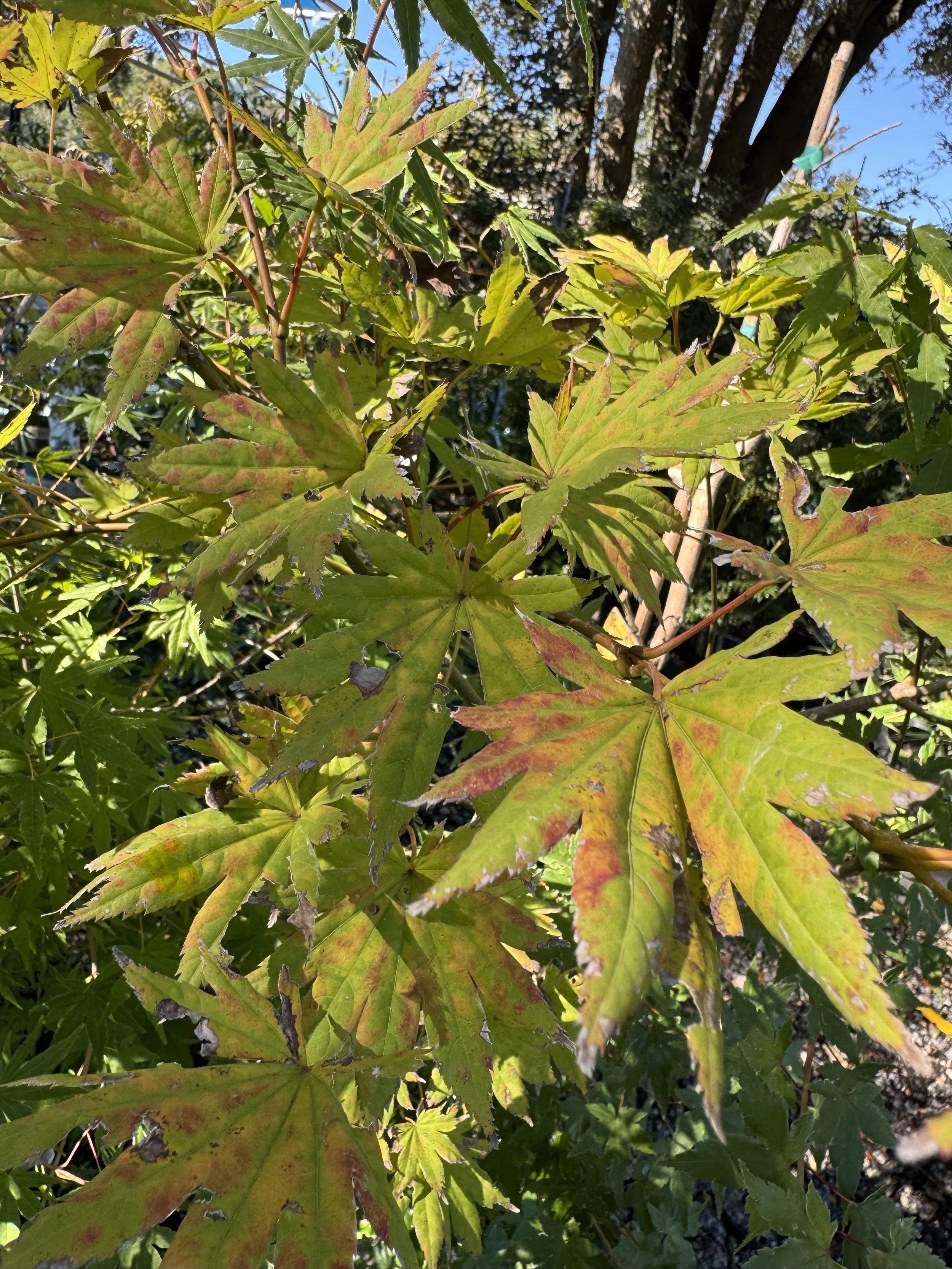
The ‘Autumn Moon’ Japanese Maple is an excellent Full Moon cultivar with yellow-green leaves in the spring and changing to a yellow-orange in fall. This yellow hue persists in the foliage throughout most of the summer, provided it receives proper light. ‘Autumn Moon’ is a small to medium-sized tree with a branching structure and bushy form.
Growth Habit: Bushy, rounded tree. Over the next 10 years, it will reach 10-12ft tall and 4-6ft wide.
Leaf type: Full, Palmate
Native Origin: Japan
Hardiness Zone: 5-9
Environment Needs: Part Sun, Morning Sun, Dappled light.
Growth Rate: Moderate
Maintenance: Review our Japanese Maple Guide for care instructions
The Red Dragon Maple is a stunning dwarf variety of Japanese Maple (Acer palmatum), renowned for its deeply cut, lacy foliage, vibrant red color, and compact, weeping form. This cultivar is particularly popular for small gardens, containers, and landscaping where year-round beauty, graceful form, and unique color are desired. The Red Dragon Maple stands out with its intense red leaves, which create a striking visual display throughout the growing season and especially during fall.
Monrovia is a premium, brand-name nursery with a strong reputation for high-quality plants. They are known for producing healthy, well-cultivated plants that are often grown with more care and attention to detail compared to plants from other nurseries.
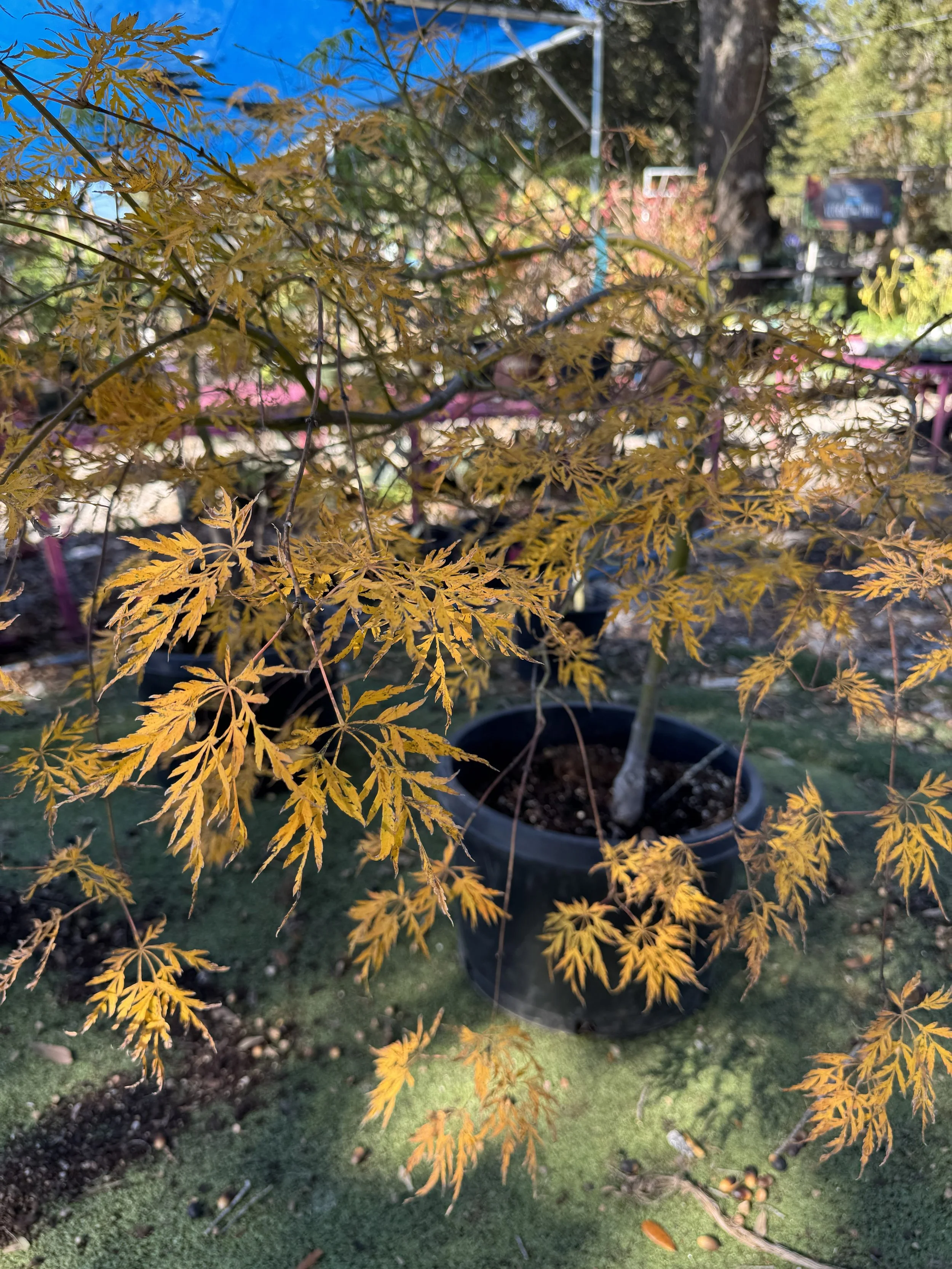
'Viridis' is a classic dwarf green Japanese maple selection with a cascading form. The 'Viridis' Japanese maple can reach 5-6 ft tall by 5-6 ft wide in 10 years. The 'Viridis' laceleaf Japanese maple leaves are a bright chartreuse green that holds until the leaves mature to a rich green by mid-summer. In autumn, the 'Viridis' Japanese maple tree turns to a bright golden yellow to orange.
This classic 'Viridis' Japanese maple tree is excellent for providing contrast against red Japanese maples. You can use 'Viridis' as a background plant or as a focal point planting. Because of the dwarf cascading habit of 'Viridis', this Japanese maple makes an excellent tree for small spaces or even for container planting. This can allow you to expand your garden with the beauty of a weeping green laceleaf Japanese maple. Deciduous.
Growth Habit: Tree
Leaf Type: Laceleaf
Native Origin: Japan
Hardiness Zone: 5-8
Deer Resistant, Rabbit Resistant
Prized fall color
Environmental Needs: Dappled Sun/Part Shade/Full Shade
Growth Rate: Slow
Maintenance: Review our Japanese Maple Guide for care instructions
Magnificent ruffled foliage on a densely branched, upright tree with a spreading canopy adds a thrilling element to the landscape. Deep purple-red spring foliage has prominent black veins. Iridescent summer foliage turns green while maintaining purple undertones. Fall foliage is a vibrant garnet-red. Develops best color in full sun. Deciduous in the winter.
Growth Habit: Upright, thick foliage. Will reach 10ft tall by 10ft wide,
Native Origin: Japan
Hardiness Zone: 5-9
Environment Needs: Part Sun, Morning Sun, 2-4 hours of afternoon sun.
Growth Rate: Moderate
Maintenance: Review our Japanese Maple Guide for care instructions
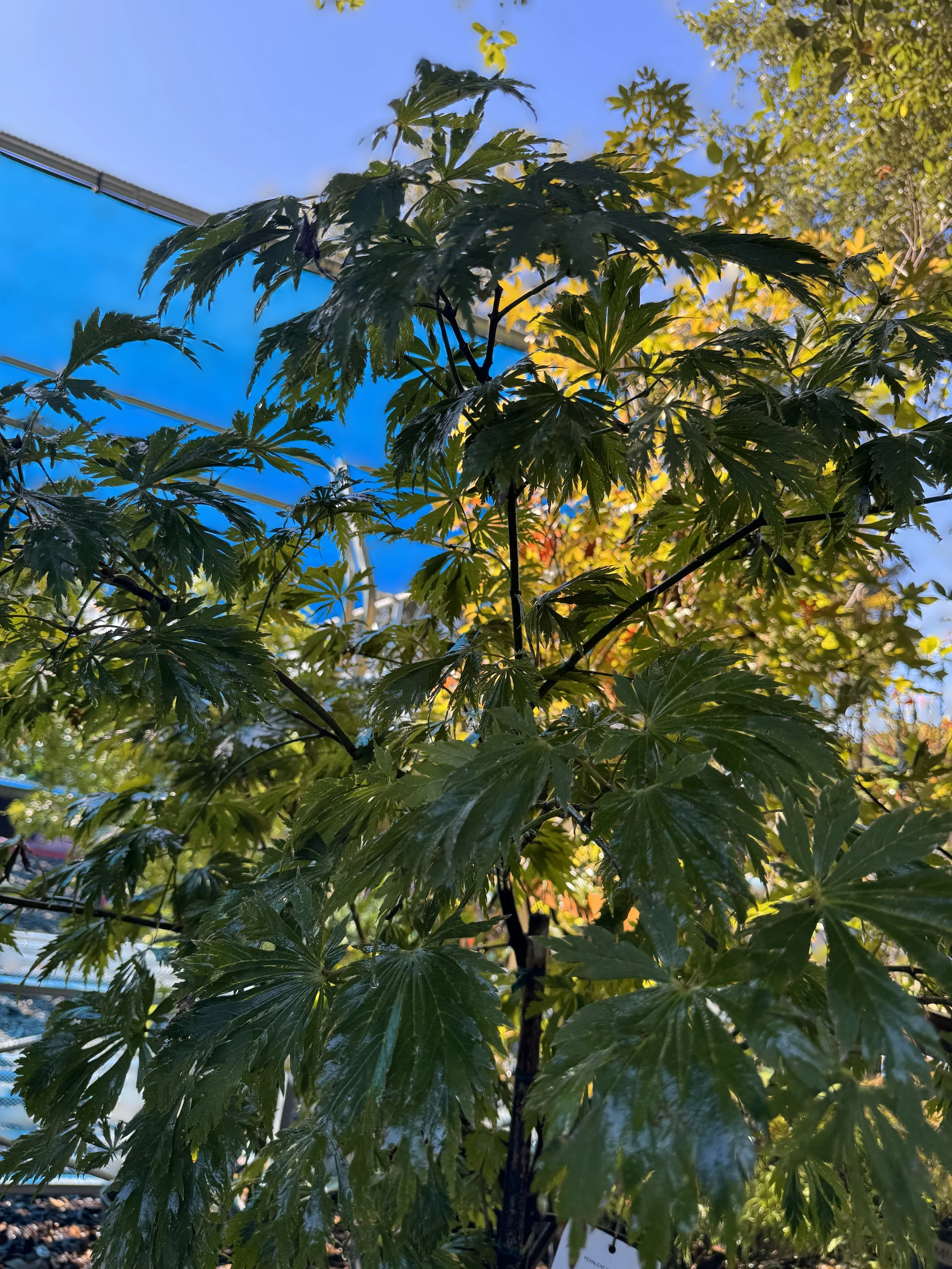
This tree is a total head-turner! It's deeply cut, lacy, fern-like leaves turn from a neon green in spring to a rich ruby-crimson, starting with the tips creeping through the full leaf as autumn approaches. An outstanding understory accent for a woodland garden or any dappled shade setting, providing year-round enjoyment. Deciduous.
Growth Habit: Upright, branching, 8 to 12 ft. tall, 8-10 ft. wide over 10 years.
Leaf type: Laceleaf, fernleaf
Native Origin: Japan
Hardiness Zone: 5-9
Environmental Needs: Part Sun, Filtered sun. Avoid fertilization. Water regularly, but avoid standing water.
Growth rate: Slow
Maintenance: Check out our Japanese Maple Guide for best practices.
Japanese Maple Guide
The Basics
Japanese Maples bring a touch of elegance to any garden. They work well as focal points, container plants, bonsais, or colorful backdrops. Whether you collect them or are just looking for a unique accent, we can help you choose the right tree and keep it healthy all year.
In milder climates, most Japanese maples can handle full sun. However, in our low-country area, the strong afternoon sun and high humidity mean these trees need more shade and water to avoid leaf scorch. In the South, red-purple varieties may turn green in the summer heat. This change won’t hurt the tree, but it may be less colorful than you expect. For the brightest colors, plant your maple where it gets full morning sun and stays cool in the afternoon.
Planting in full afternoon sun is strongly discouraged. However, there are a few exceptions if your planting area gets only 2-4 hours of strong afternoon sun, such as the Coral Bark, Bloodgood or the Crimson Queen. In general, the darker the leaves, the more sun your tree can handle. Considering the Japanese maple's mature size when choosing a location is also a must. Even though these trees grow slowly, make sure there's plenty of space for your maple to grow tall and wide without hitting power lines or architectural features, or obstructing sunlight for other trees and plants. These trees typically have shallow, compact roots, staying close to the soil surface. Making them generally safe to plant near structures like foundations, walkways, and patios. If you live in an area with heavy clay soil, consider planting them slightly elevated in slightly acidic, well-draining soil rich in organic matter. This will help guard against root rot and disease caused by dense clay.
Characteristics and Varieties
At Southern Marsh Nursery, we carry 15 different varieties. All have different leaf patterns, color palettes, and growth habits.
Leaf Shape: There are two main types of Japanese maples. Upright maples have the classic lobed leaves or “palmate” leaves, referring to their open hand shape. While dissected or laceleaf maples have very fine, lacy or even fern-like leaves.
Color Palette: Japanese maples come in many colors, from green to red to purple. In the fall, their leaves can turn bright orange, yellow, deep purple, or even greenish-gold.
Growth Habits: Some Japanese maples grow up to 20 feet tall, while dwarf types are great for containers and bonsais. Upright varieties like Shishigashira or Coral Bark Maple grow tall, while others like Crimson Queen form a bushy mound. Weeping types, such as the waterfall maple, have a graceful, cascading shape.
Container Maples: Slow-growing dwarf types like Red Dragon or Orangeola are just the right size for containers. Their finely cut leaves turn bright red and orange in the fall. Over 10 years, they can grow 4-6 feet tall and 5-8 feet wide.
Standalone Maples: If you want a standout tree for your garden, try the Coral Bark maple. It is known for its red-coral bark and colorful fall leaves. This tree can grow up to 25 feet tall and 20 feet wide. Even after it loses its leaves in winter, the bright red bark stays eye-catching.
Caring for your Maple
Japanese Maples do best in conditions similar to their natural home, which are forested areas with protection from wind and strong afternoon sun. Most grow well in Zones 5-9. To keep their leaf colors bright and healthy, plant them where they get a good mix of light and shade.
These trees thrive in any well-drained, consistently moist soil—except highly alkaline soil. Because these maples have sensitivity to extreme heat and sunlight, summer planting may not be the best choice. Planting in early spring or fall is ideal for most Japanese maples.
Water: Give your maple plenty of water when you plant it, and keep watering regularly. Once the roots are established, the tree can handle short dry spells, but avoid overwatering and water more during droughts. Use mulch to protect the roots from heat and cold, and to help the soil stay moist. Keep mulch a few inches away from the trunk to prevent damage or disease.
Fertilizer: In spring, use a low-nitrogen fertilizer, ideally N-15 or lower. Don’t fertilize after May, as this can affect fall color and winter strength. Wait until the second growing season to fertilize new maples, after their roots are established.
Pruning: When pruning a Japanese maple, make careful cuts to highlight its natural shape and improve airflow. Thin out small twigs and crossing branches instead of cutting back large sections. The best time for major pruning is late winter when the tree is dormant. You can remove dead, damaged, or diseased wood at any time.
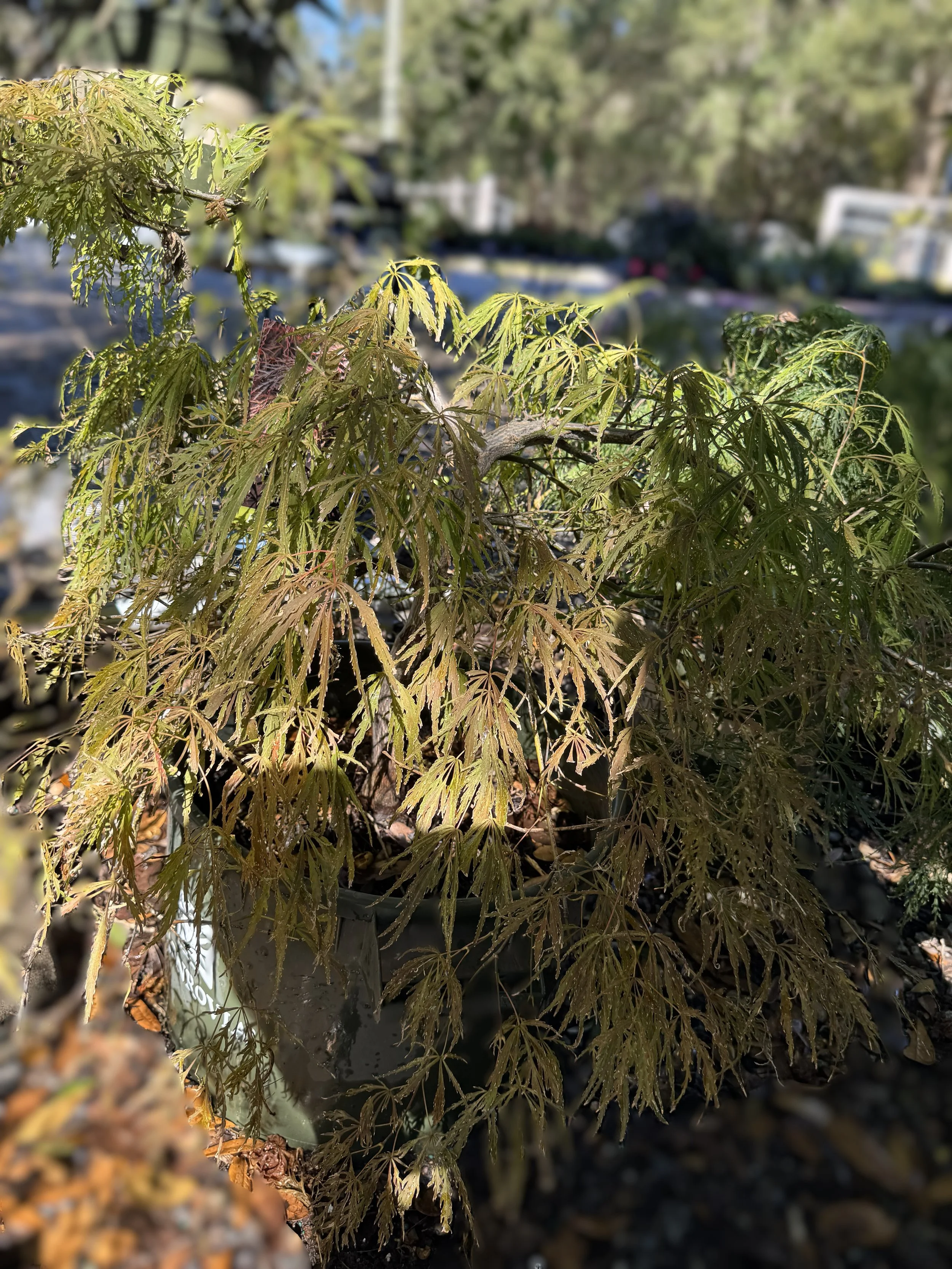
Crimson Queen Japanese Maple is one of the finest and most well-known of all Japanese maples. A low-branching, dwarf tree with a delicate, weeping form. The foliage holds its beautiful crimson color throughout summer, turning a green bronze, and can turn bright scarlet in autumn. It is sun-tolerant in cooler regions, where sunlight intensifies the foliage color. Plant in a bright, dappled shade setting elsewhere. Well-suited for use as a container specimen or bonsai.
Growth Habit: Upright, Dwarf, Weeping, Can reach up to 10ft tall and wide over 10 years
Leaf Type: Laceleaf
Native Origin: Japan
Hardiness Zone: 5-9
Environmental Needs: Part Sun, Filtered sun. Avoid fertilization. Water regularly, but avoid standing water
Growth rate: Moderate
Maintenance: Check out our Japanese Maple Guide for best practices.
The Waterfall Maple is a unique weeping variety of Japanese Maple (Acer palmatum) known for its graceful cascading branches, vibrant foliage, and compact size. This tree is highly valued for its delicate, flowing form, which adds a sense of tranquility and elegance to any landscape. The Waterfall Maple is perfect for small gardens, container planting, or as a specimen tree in more confined spaces, where it will create visual interest throughout the seasons.
Monrovia is a premium, brand-name nursery with a strong reputation for high-quality plants. They are known for producing healthy, well-cultivated plants that are often grown with more care and attention to detail compared to plants from other nurseries.
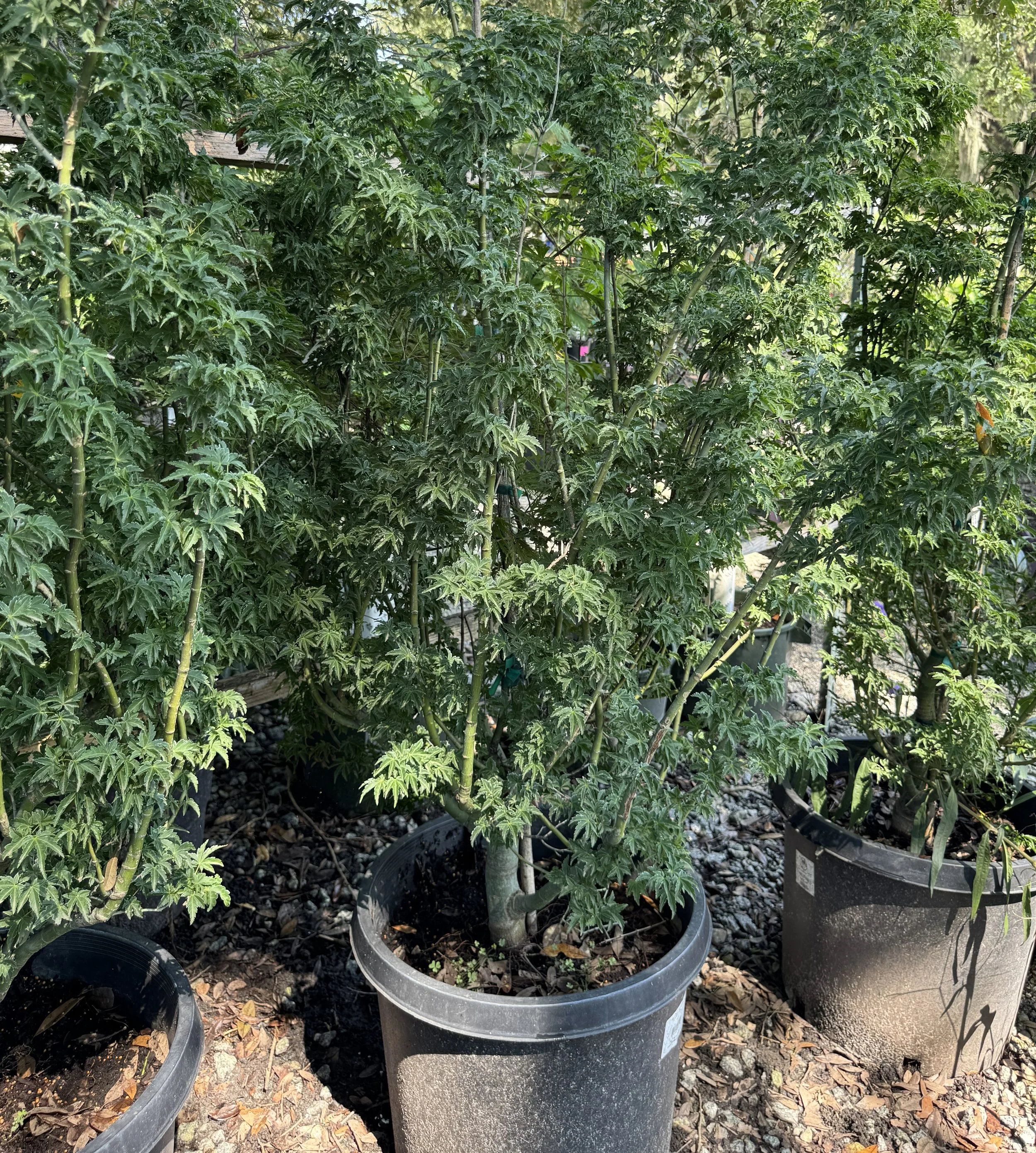
Heavily curled, deep-green leaves give this compact, shrubby cultivar a unique texture. The dense foliage keeps its emerald color through spring and summer, then becomes purple-red with orange-red patterns in fall. Color intensity depends on how many hours of full sun the tree receives. Shishigashira is less likely to sunburn than other varieties, but only 2-4 hours of full afternoon sun is recommended for our local climate, and it tends to grow best in filtered sun. Popular for bonsai, as a container specimen, small gardens, and a prized focal point tree. Highly sculptural form that improves with age.
Growth Habit: Compact, upright, dense, 6-8 feet Width: 3-4 feet
Leaf Type: Palmate, curled
Native Origin: Japan
Hardiness Zone: 5-9
Environment Needs: Part Sun, Morning Sun, can handle small amounts of full afternoon sun
Growth Rate: Slow
Maintenance: Review our Japanese Maple Guide for care instructions
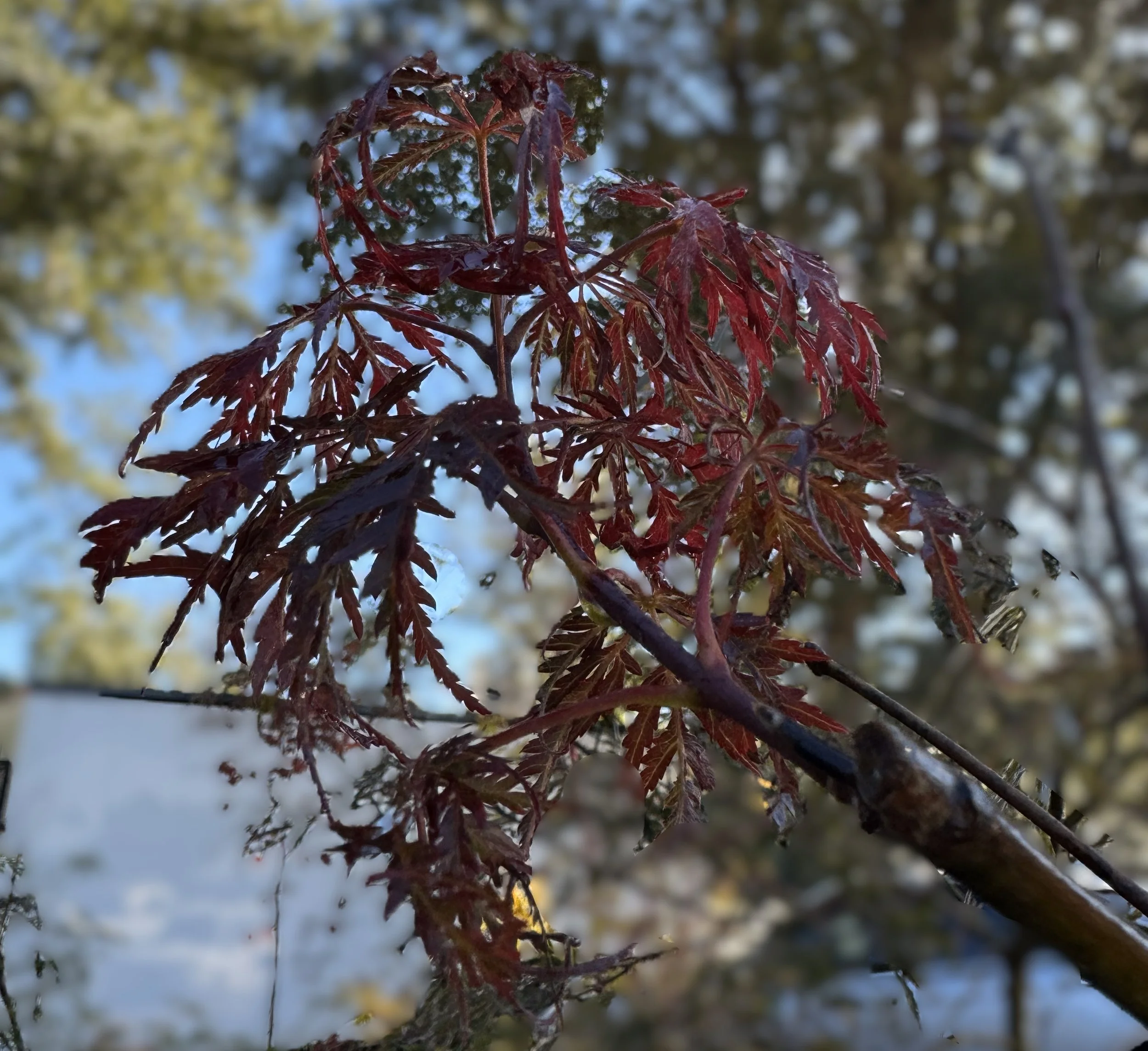
Inaba Shidare Japanese Maple is one of the best lace-leaf maples for hotter climates. It will grow wider than it is tall; its arching form creates a swirling sculpture that adds interest even in winter, after the leaves have fallen. The leaves start out in spring as a dark purple, sometimes described as almost black, then become more red to bronze in summer, before turning scarlet red in the fall. It is one of the hardier cultivars of Japanese maples.
Growth Habit: Weeping, arching, mounding, 4-6ft. tall, 6-8ft. wide over 10 years.
Native Origin: Japan
Leaf Type: Laceleaf
Hardiness Zone: 5-9
Environmental Needs: Part Sun, full afternoon sun limited to 3-5 hours.
Avoid fertilizing unless planted in a container; use a slow-release fertilizer instead. Water regularly, but avoid standing water.
Growth rate: Slow
Maintenance: Check out our Japanese Maple Guide for best practices.
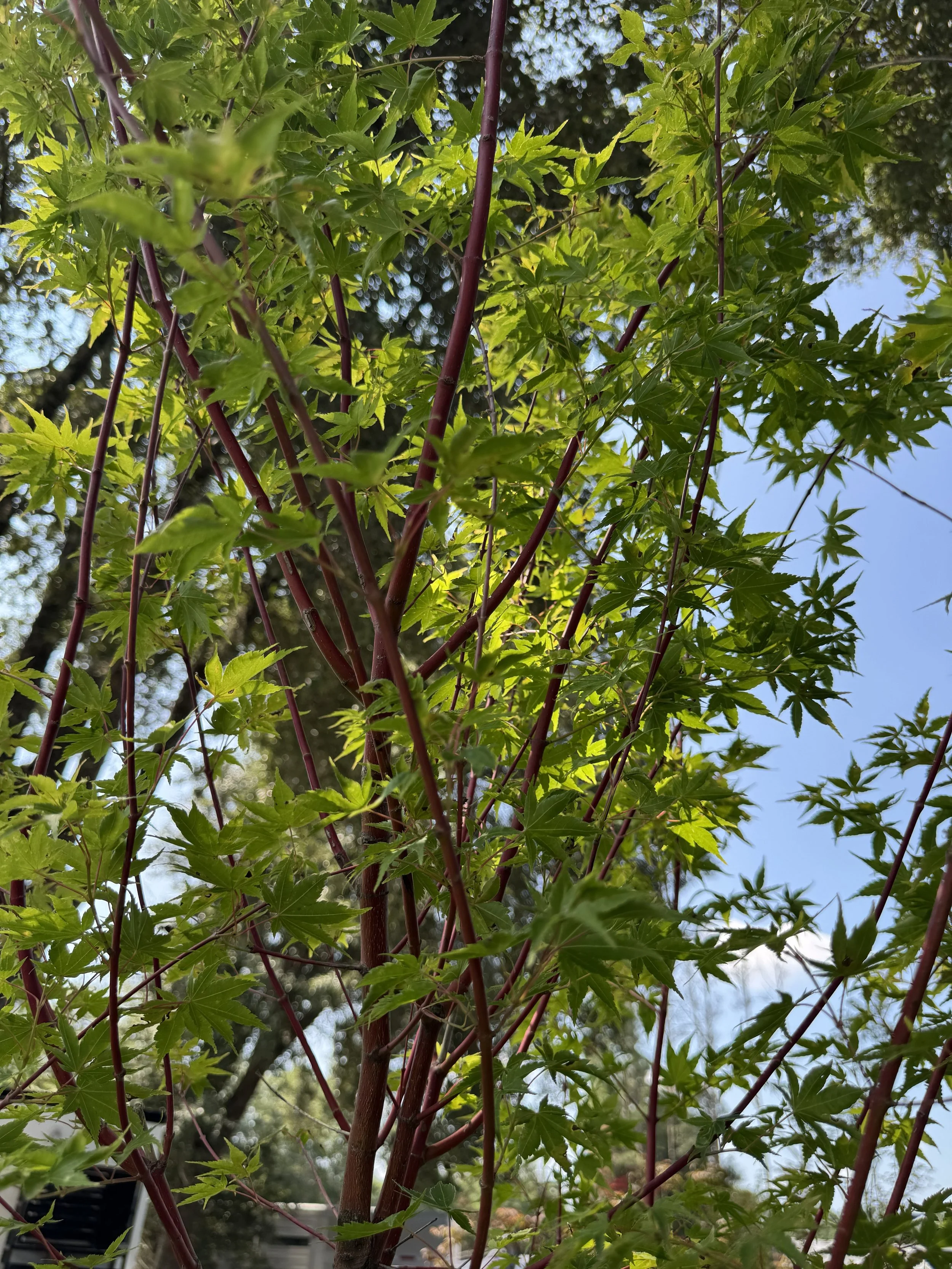
This beautiful tree has brilliant red-coral bark, which intensifies in winter. Deeply cut, yellow-green leaves display attractive red margins and turn a vibrant, golden yellow in fall. It thrives in bright dappled shade in warmer regions, or in full sun in cooler regions. It's deciduous, but stays a stunner in winter when the bark of the tree is fully exposed, showing off the vibrant red limbs.
Growth Habit: Upright, rounded shape. One of the taller Japanese varieties, reaching 15-25ft tall and 19-15ft wide.
Leaf type: Palmate
Native Origin: Japan
Hardiness Zone: 5-9
Environment Needs: One of the few Japanese maples that can handle full sun,
Growth Rate: Moderate
Maintenance: Review our Japanese Maple Guide for care instructions
An upright, columnar Japanese Maple and cultivar of the Bloodgood Maple! The Twombly's Red Sentinel Japanese Maple Tree is a new, rare, and highly sought-after variety! Its unique columnar growth makes it perfect for narrow spaces in urban gardens, tight spaces, or accent trees for patios. The deep red foliage lasts throughout the seasons, shifting from deep maroon to a fiery red in autumn. Despite being deciduous, the stems darken to blood red in winter, providing year-round interest.
Growth Habit: Upright,columnar, narrow-growing 10 to 15 ft. tall, 6-8 ft. wide over 10 years.
Native Origin: Japan
Hardiness Zone: 5-9
Environmental Needs: Part Sun, Filtered sun. Limited full afternoon sun.
Avoid fertilization. Water regularly, but avoid standing water.
Growth rate: Slow
Maintenance: Check out our Japanese Maple Guide for best practices.