
Fertilization Guide
Understanding fertilizer can be challenging. How much should you use? How much is too much? And what do all these ratios and letters mean?
Fertilizer can be tricky; applied at the wrong time or in excess, it can burn or kill plants. Synthetic fertilizers like 10-10-10 or Bio-tone help new transplants quickly but may harm roots if overused. Understanding the NPK ratios listed on packages is key. Nitrogen (N) is responsible for the growth of greenery and is the most depleted resource in your soil. Phosphorus (P) is responsible for establishing roots, flowering, and fruiting. Potassium (K) supports your plant's metabolism, hardiness, and disease resistance. All of this is best distributed in early spring or fall and should be applied immediately before or after planting.
Nitrogen is what plants use the most from the soil, but over-fertilizing isn’t always a good thing. Too much nitrogen can cause delayed fruiting or flowering. It can also be costly as nitrogen travels with water, meaning with each watering of your containers or gardens are losing nitrogen with the runoff. Signs of over fertilization include: slow or no growth, defoliation, yellowing and wilting leaves, and browning tips.
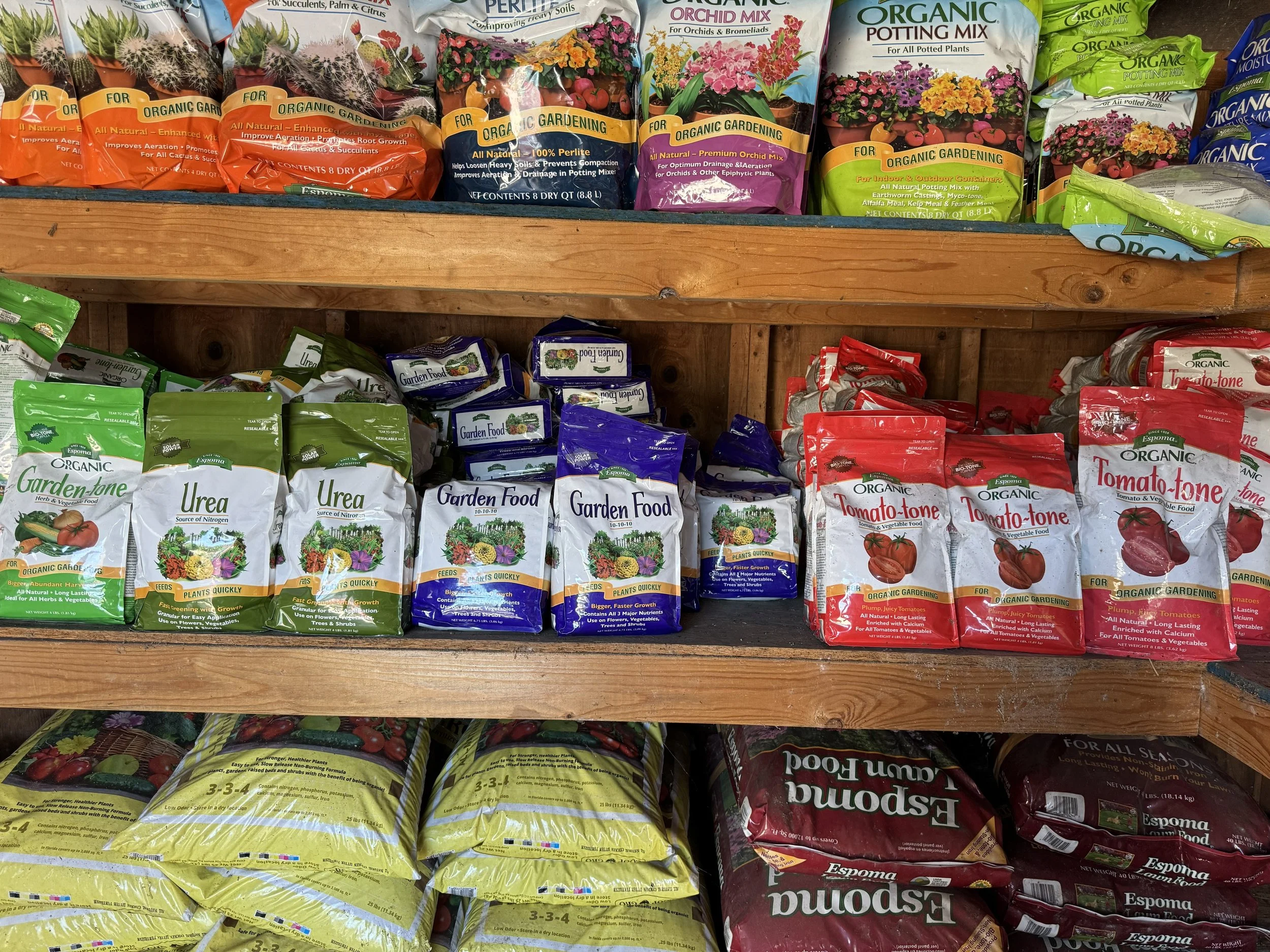
Shop our variety of fertlizers and find what works for your next project.