Horne Worm
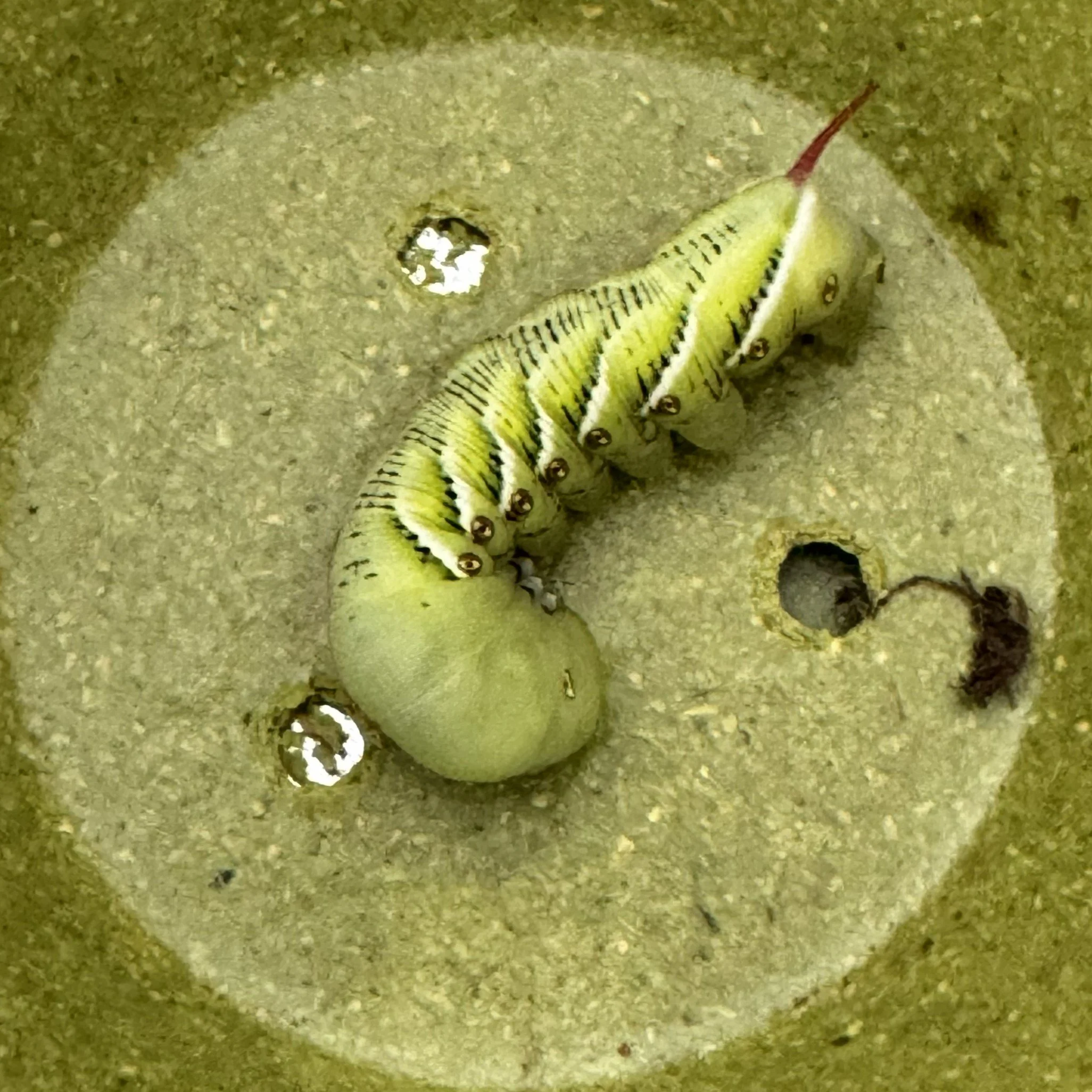
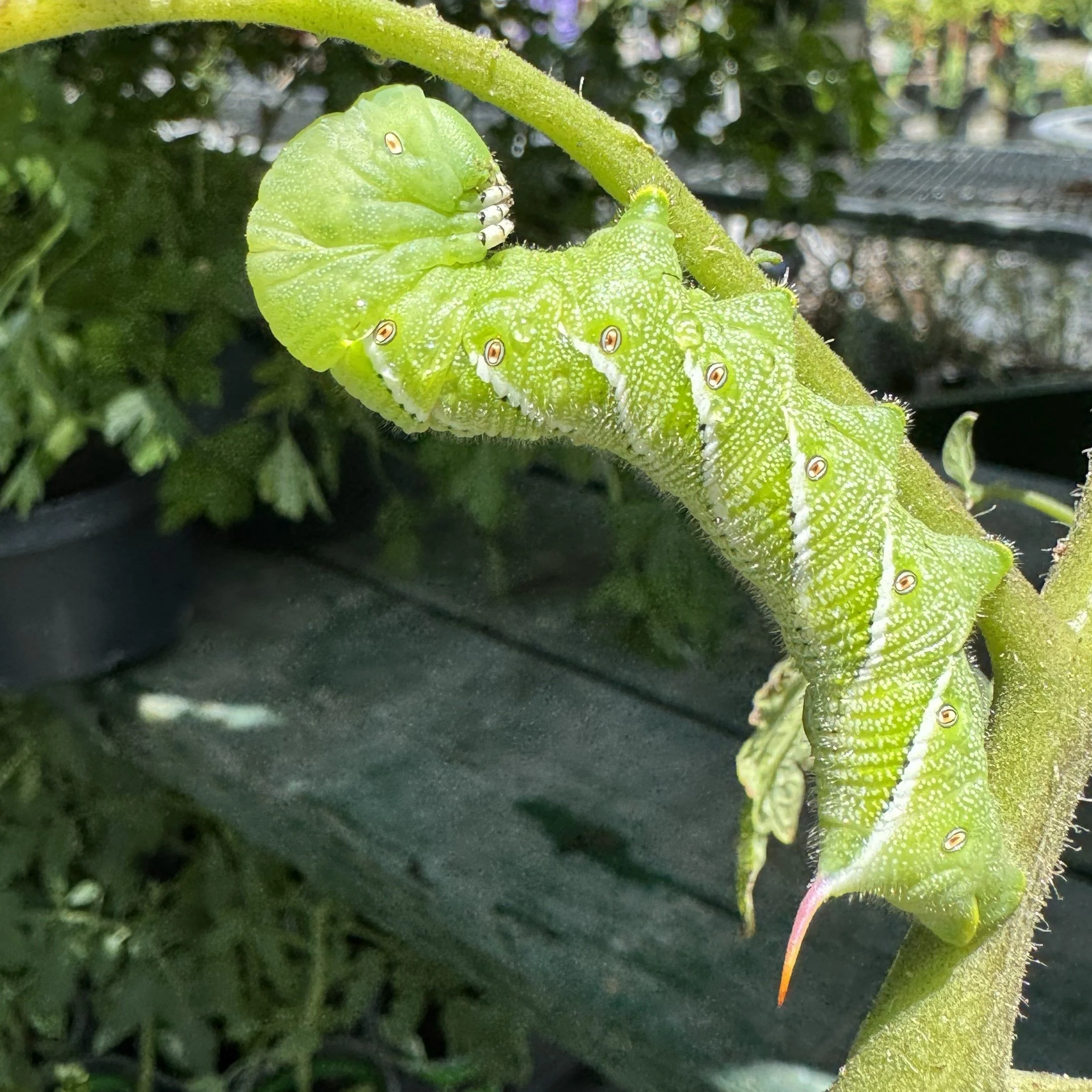
Have you ever gone out to enjoy your garden to find your tomato plant defoliated and tomatoes already sampled by local wildlife? The likely culprit is the hornworm! These pesky caterpillars are very easy to identify by size alone; they can get to be 4-5inches and eat up to 4 times their weight in food. These worms are a green-blue color that camouflages them perfectly among your garden. White arrow-shaped lines on their back and small yellow circular ‘eyes’ just below. They’re most defining feature is the black or reddish brown horn on their rear, but don’t worry, they cannot sting you and are harmless to humans.
Signs of Hornworm activity include defoliation; you’ll see that leaves and even whole branches are gone. Stems may wilt as they are exposed to more sun, and you may even see where large chunks of fruit have been nibbled on. Hornworms are well known for liking tomatoes, but they can also be found on tobacco, peppers, eggplant, and potatoes. A third sign of hornworm activity is frass, the large dark green caterpillar poop that collects around the base of the plant and on leaves.
To take back your tomato’s the easy way, just pick the worm off and squish it. They are rather big and juicy, so if you don’t have the stomach for that option, toss them in soapy water or give your chickens a tasty treat. If you opt to use a pesticide, we recommend neem oil as it's nontoxic and won’t leech into your fruit. It is a less reliable option as it can smother beneficial bugs, and the hornworm's large size makes it less likely to be affected. Another organic option is to companion plant your vegetables with basil, dill, and marigolds to help keep pests away. Hornworms will be more attracted to dill, which will save your tomatoes. Continue to check your plants often to prevent the damage the caterpillars do.