
 Image 1 of 1
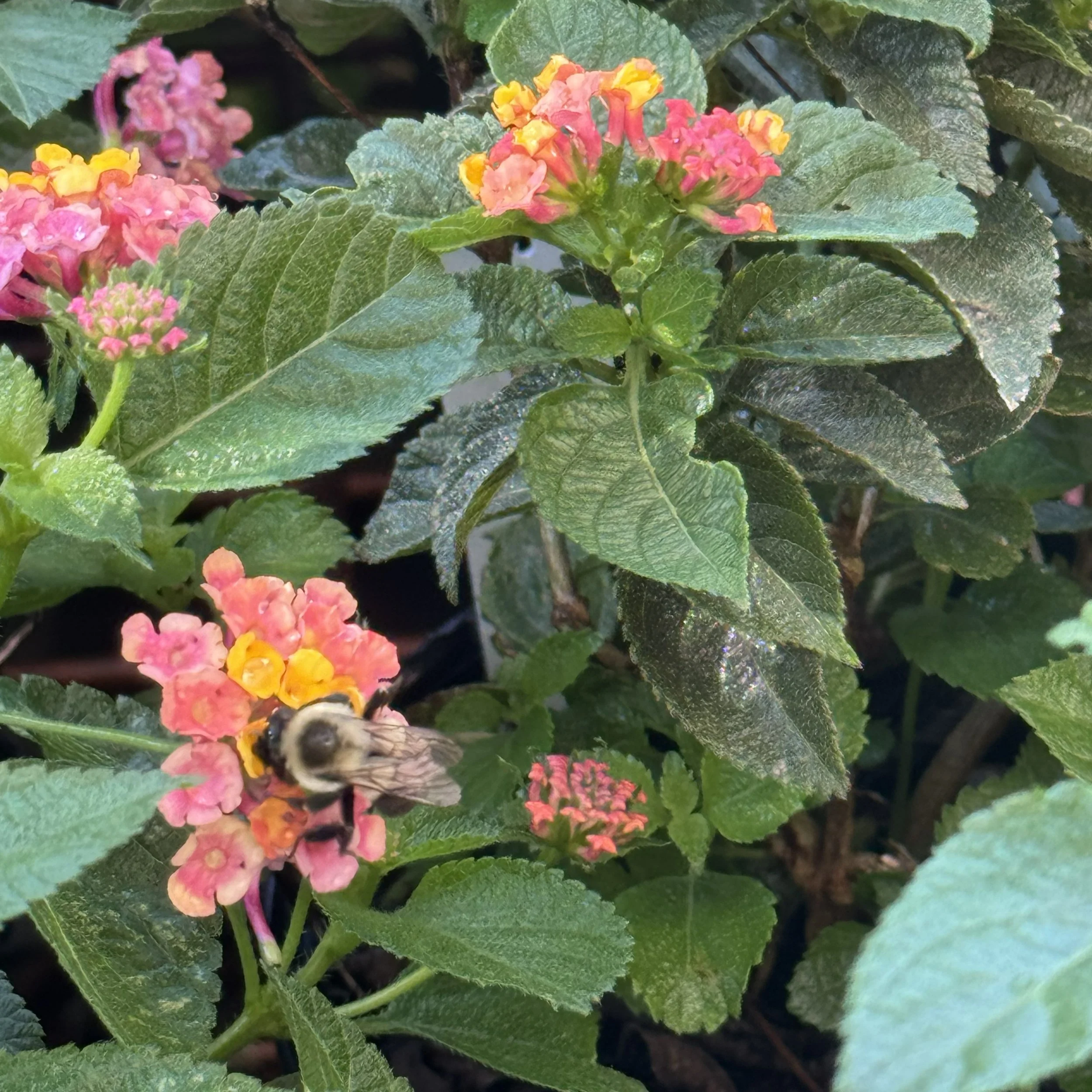
This lantana has pink, red, and yellow flowers that cover the plant for months on end. Extremely butterfly-friendly, it makes a great border or mass planting for a show of color. It will freeze back in the cold however usually recovers nicely in the spring.
Lantana is heat, salt, and drought-tolerant. It is easy to grow and very low maintenance. Lantana also comes in several attractive varieties; both the native and non-native species are pollinator-friendly. Bees and butterflies flock to the bright mounds of color.
Growth Habit: Spreading, Mounding, Compact, Bushy
Native Origin: Mexico, Central South America
Hardiness Zone: 8-11
Environment Needs: Full Sun
Drought-tolerant, Deer and Rabbit-resistant, Humidity-resistant.
Toxic to Dogs and Cats
Growth Rate: Fast Growing
Maintenance: Thrives in average, well-drained soils. Water deeply and regularly in the first growing season to establish the root system. Once established in the landscape, reduce the frequency of watering; continue to water container plants regularly. Fertilize in spring. Prune topiary form regularly to maintain size and shape, especially for spreading varieties.
This lantana has pink, red, and yellow flowers that cover the plant for months on end. Extremely butterfly-friendly, it makes a great border or mass planting for a show of color. It will freeze back in the cold however usually recovers nicely in the spring.
Lantana is heat, salt, and drought-tolerant. It is easy to grow and very low maintenance. Lantana also comes in several attractive varieties; both the native and non-native species are pollinator-friendly. Bees and butterflies flock to the bright mounds of color.
Growth Habit: Spreading, Mounding, Compact, Bushy
Native Origin: Mexico, Central South America
Hardiness Zone: 8-11
Environment Needs: Full Sun
Drought-tolerant, Deer and Rabbit-resistant, Humidity-resistant.
Toxic to Dogs and Cats
Growth Rate: Fast Growing
Maintenance: Thrives in average, well-drained soils. Water deeply and regularly in the first growing season to establish the root system. Once established in the landscape, reduce the frequency of watering; continue to water container plants regularly. Fertilize in spring. Prune topiary form regularly to maintain size and shape, especially for spreading varieties.