
 Image 1 of 2
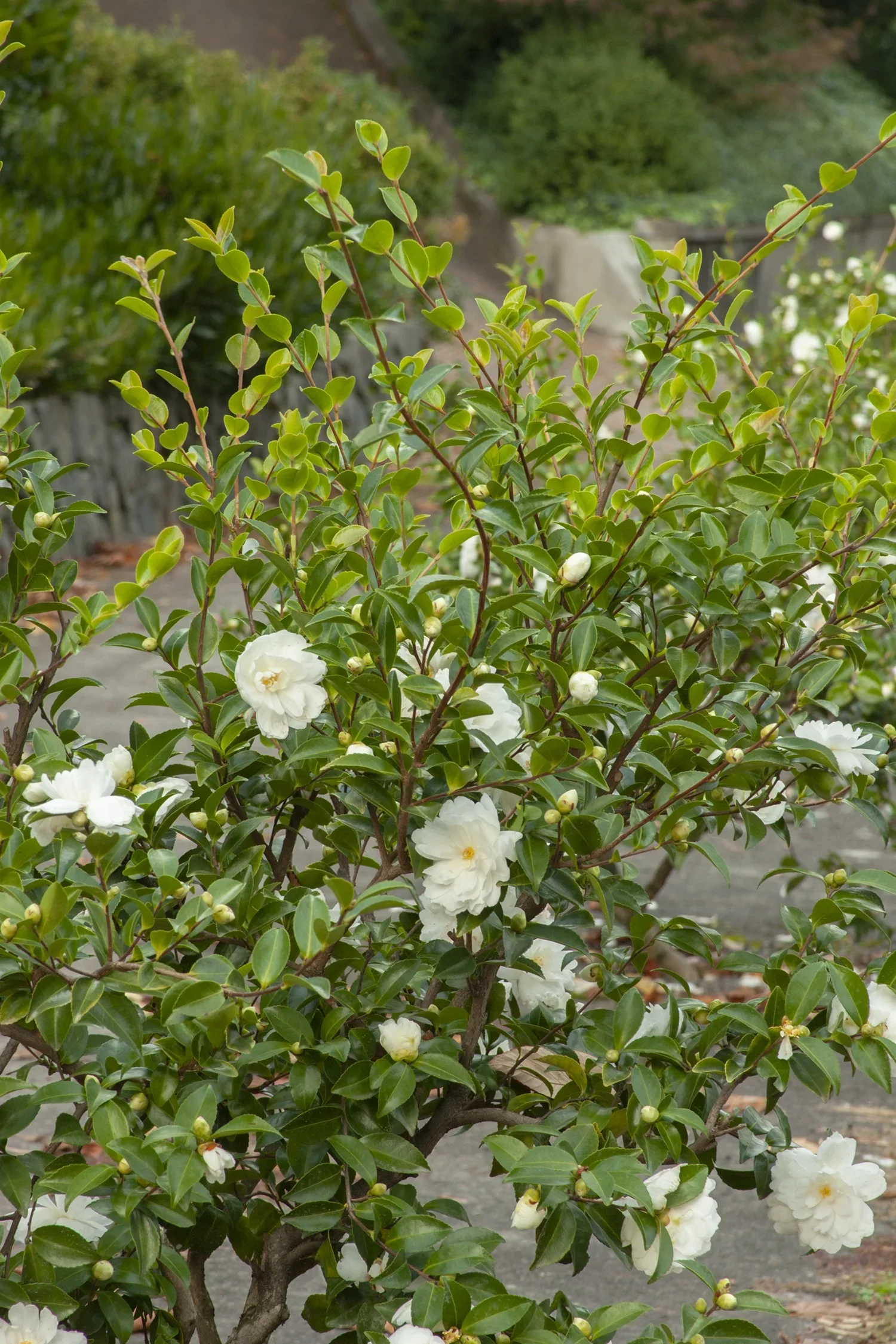 Image 2 of 2
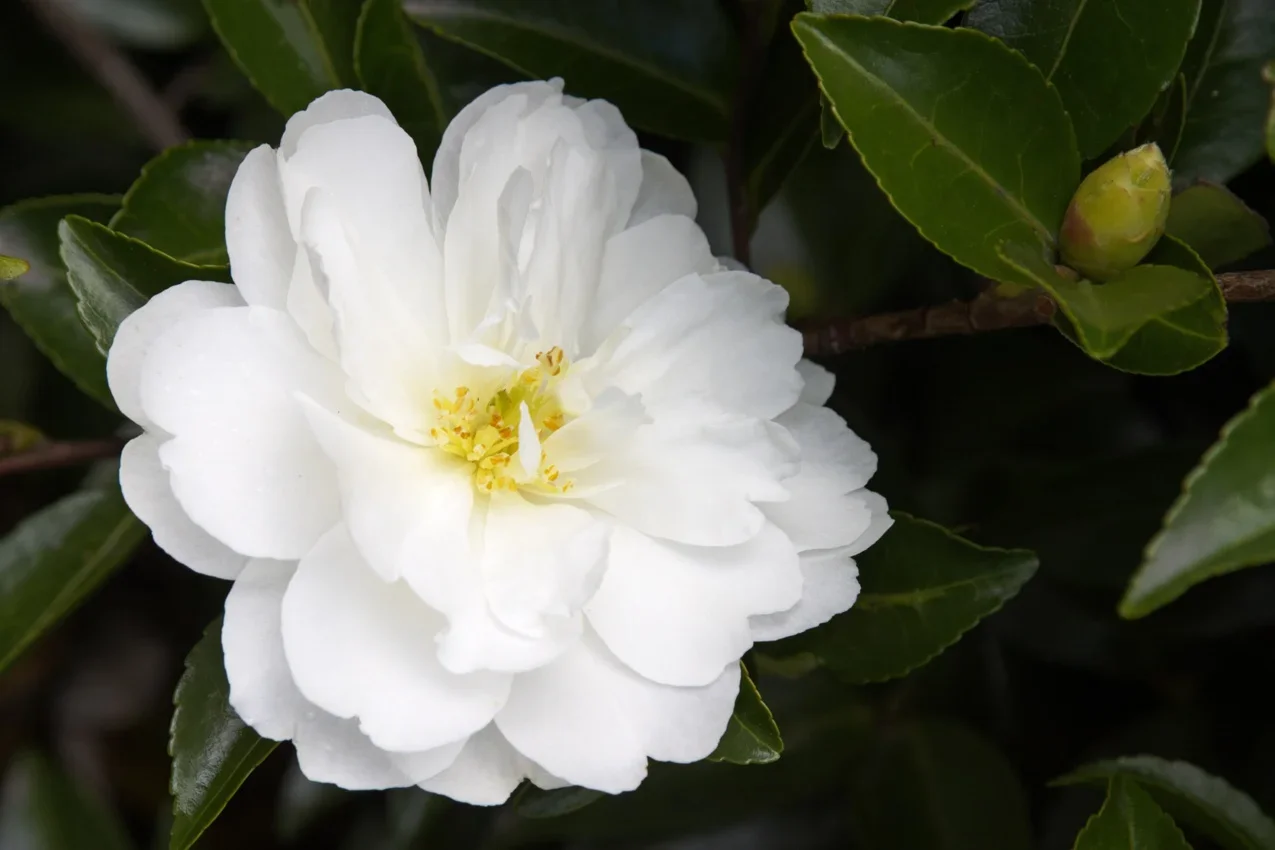
Sparkling white, semi-double blooms cover glossy dark green foliage during the cool season. Upright, somewhat willowy branches form a handsome rounded shrub with age. Excellent for use as an accent, evergreen hedge, or espalier. A mid-season bloomer. Sometimes referred to as Christmas Camellias, the sasanqua varieties of Camellia are native to the evergreen, coastal forests of southern Japan. It was introduced by Dutch traders into Europe in 1869. The Japanese use the leaves of sasanqua to make tea, and the seeds are pressed into tea seed oil for use as a lubricant and in cooking and cosmetics.
Growth Habit: Shrub, Rounded, Weeping, Reaches 6 to 9 ft. tall and wide.
Native Origin: Japan, China
Hardiness Zone: 7-10
Environmental Needs: Filtered sun, Full shade, Partial shade, Partial sun
Growth Rate: Moderate
Maintenance: Provide organically rich, well-drained, acidic soil. Keep roots cool with a thick layer of mulch. Water deeply and regularly during the first growing season to establish an extensive root system; reduce frequency, once established. Feed with an acid fertilizer after flowering.
Sparkling white, semi-double blooms cover glossy dark green foliage during the cool season. Upright, somewhat willowy branches form a handsome rounded shrub with age. Excellent for use as an accent, evergreen hedge, or espalier. A mid-season bloomer. Sometimes referred to as Christmas Camellias, the sasanqua varieties of Camellia are native to the evergreen, coastal forests of southern Japan. It was introduced by Dutch traders into Europe in 1869. The Japanese use the leaves of sasanqua to make tea, and the seeds are pressed into tea seed oil for use as a lubricant and in cooking and cosmetics.
Growth Habit: Shrub, Rounded, Weeping, Reaches 6 to 9 ft. tall and wide.
Native Origin: Japan, China
Hardiness Zone: 7-10
Environmental Needs: Filtered sun, Full shade, Partial shade, Partial sun
Growth Rate: Moderate
Maintenance: Provide organically rich, well-drained, acidic soil. Keep roots cool with a thick layer of mulch. Water deeply and regularly during the first growing season to establish an extensive root system; reduce frequency, once established. Feed with an acid fertilizer after flowering.