
 Image 1 of 1
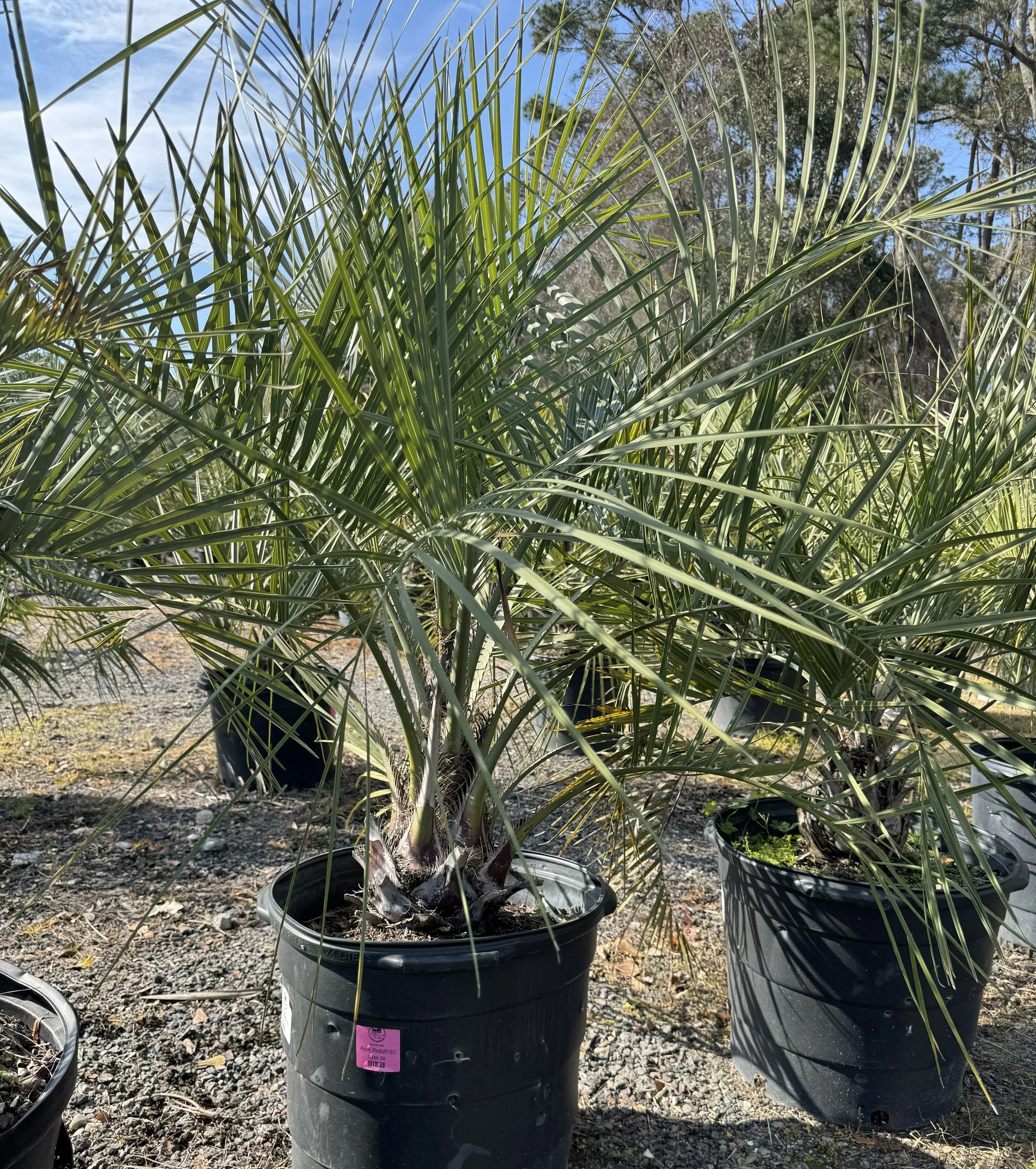
Pindo palms, scientifically known as Butia capitata, are native to South America, particularly Brazil, Argentina, and Uruguay. They are characterized by their slender, arching fronds and can grow up to 15 to 20 feet tall. Pindo palms thrive in well-drained soil and full sun, making them popular in landscaping. They are also known for producing sweet, edible fruits, sometimes referred to as "pindo dates," which can be used in jams and desserts.
Growth Habit: Upright, Arching, 15-20ft
Native Origin: South America
Hardiness Zone: 8-11
Environment Needs: Full Sun, 6-8 hours of sun per day.
Water your Palm 2-3 times per week for the first month, then once a week for the remainder of the first year after planting. Keep the soil moist but well-drained, watering more in times of drought and less when there is rainfall.
Growth Rate: Slow
Maintenance: Apply palm-tone, slow-release fertilizer close to the base of the tree at the start of spring.
Pindo palms, scientifically known as Butia capitata, are native to South America, particularly Brazil, Argentina, and Uruguay. They are characterized by their slender, arching fronds and can grow up to 15 to 20 feet tall. Pindo palms thrive in well-drained soil and full sun, making them popular in landscaping. They are also known for producing sweet, edible fruits, sometimes referred to as "pindo dates," which can be used in jams and desserts.
Growth Habit: Upright, Arching, 15-20ft
Native Origin: South America
Hardiness Zone: 8-11
Environment Needs: Full Sun, 6-8 hours of sun per day.
Water your Palm 2-3 times per week for the first month, then once a week for the remainder of the first year after planting. Keep the soil moist but well-drained, watering more in times of drought and less when there is rainfall.
Growth Rate: Slow
Maintenance: Apply palm-tone, slow-release fertilizer close to the base of the tree at the start of spring.