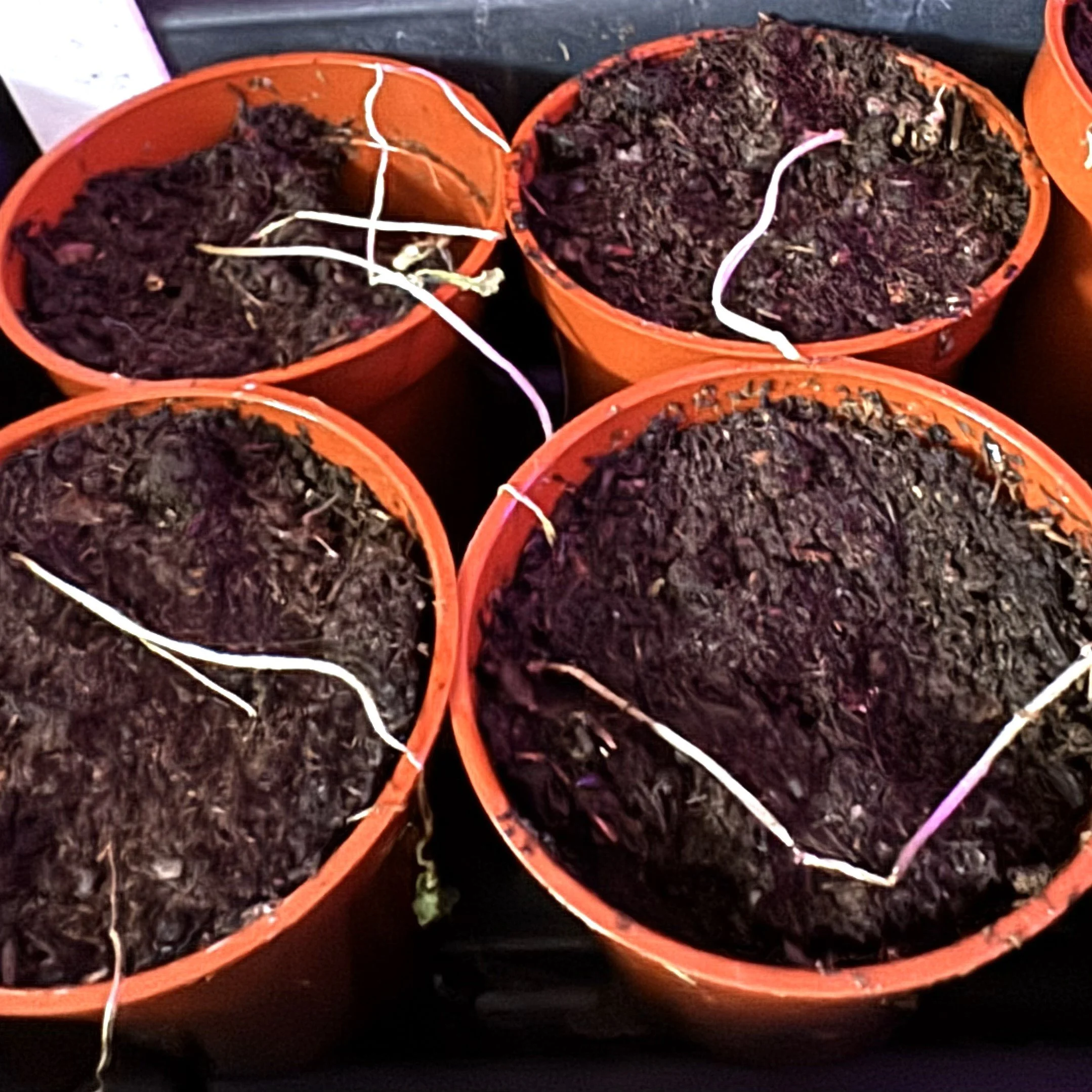
Damping-off
Have you ever started seeds, only to have them die just after sprouting? This problem is called damping off. It’s caused by certain fungi in soil and spread through water which can be disastrous for whole trays of seeds. Once seedlings get damping off, there’s no cure, but you can prevent it. Seedlings affected by damping off almost never grow into healthy plants and in some cases, these fungi can also cause root or crown rot in older plants if conditions are right.
If you notice these symptoms in your seedlings, you may be experiencing damping off.
Fluffy white cobweb-like growth on plant parts under high humidity.
Seedlings fail to emerge from the soil.
The first leaves produced by a seedling are soft, mushy, and may be discolored gray to brown.
Seedling stems become thin and wither.
Young leaves wilt and turn green-gray to brown.
Roots are absent, stunted, or have grayish-brown sunken spots.
All soil usually has small amounts of the damping-off fungi but if you use garden soil to start seeds, your more likely to bring these fungi into the warm, wet conditions that help seeds and the fungi grow. Damping-off fungi actually does best in cool, wet conditions. Anything that slows plant growth, like low light, too much water, too much fertilizer, or cool soil, can increase the likelihood of damping off. To keep this fungus away from your seedlings, clean your seed trays and any tools that come into contact with your seeds. Washing them with vinegar or a 10% bleach solution works best.
Another good way to prevent problems is to use fresh seed-starting soil. Save your used garden soil for transplanting older plants, since mature plants are better at fighting off these fungi. Because most damping-off fungi live in soil, starting with new soil is important. Keeping your seedlings warm, between 70 and 90 degrees Fahrenheit, and giving them enough light can help prevent disease. Damping off is more common in cooler temperatures, so warmth also helps seeds sprout better. Be careful not to overwater, since the fungus can spread via water and cause root rot. Good air flow is important, too. Stagnant water on leaves and stems can promote fungal growth, especially in humid environments. You can improve air circulation by giving your plants more space or by using a fan nearby.