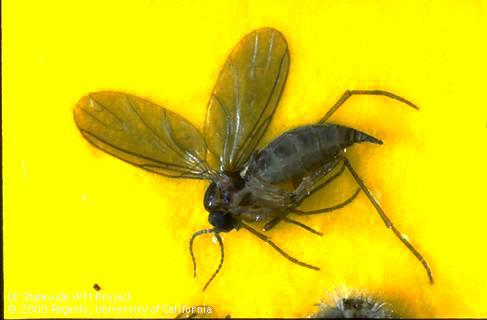
Fungus Gnats
You’ve probably met a few Fungus gnats in your life, especially if you have indoor plants! They are small nuisance flies that commonly infest potted plants; they very rarely affect landscaping. The larvae primarily feed on fungi and other organic matter in the soil, including roots, if they run out of other organic matter. Not only are they just downright annoying, but they can also infect the roots with root rot or carry fungal infections from one plant to another. They have beenfound to transmit fungal diseases, including black root rot, Pythium blight, Verticillium wilt, Botrytis blight, and Fusarium wilt.
You will see adults resting on plants or soil, on window sills or walls, or in flight. That can be pretty devastating if you’re a collector of house plants. You will see adults resting on plants or soil, on window sills or walls, or in flight. Adult fungus gnats are harmless and won't directly damage plants or bite people; they're just considered a nuisance. Larvae, however, can damage roots and stunt plant growth, particularly in seedlings and young plants. They thrive in moist conditions, meaning overwatering a plant is a surefire way to attract Fungus gnats. The best way to prevent a fungus gnat outbreak is to provide good drainage to plants and let the soil dry between waterings. We recommend a moisture meter (we sell multiple moisture, ph, and light meters) if you have any picky plants with special watering needs.
If you’re noticing wilting and yellowing leaves this can be a sign of root rot, especially if the plant doesn't have the correct soil conditions. To prevent further damage, remove the plant and wash the dirt from the roots before replanting in new soil and a pot with good drainage. To keep fungus gnat populations to a minimum, we recommend using sticky traps to control the flies and using Arber Bio-Fungicide to suppress fungal growth.